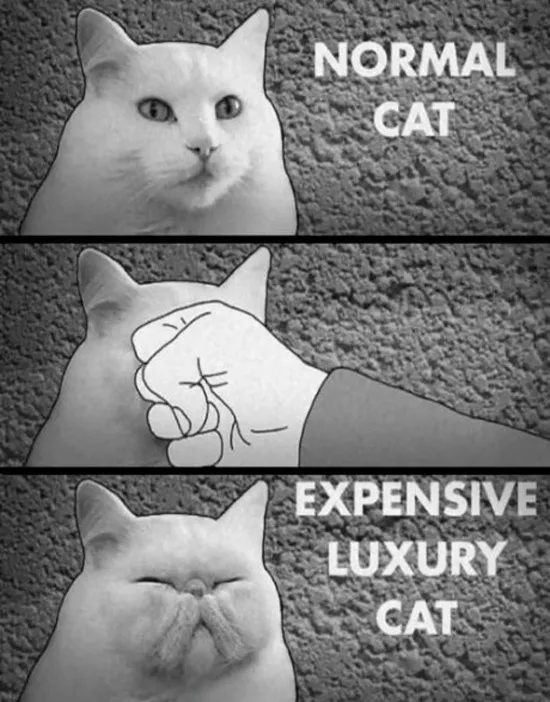
There are endless and sometimes justifiable discussions about many bubbles percolating these days at the cusp of bursting, notably stock market, student loans, real-estate market (again), commodities, currencies, etc. The word ‘luxury’ has morphed into a label that’s applied and slapped on to everything from private jets to dog food enabling firms from family-run to large corporations to increase prices exponentially in excess of its actual value. Uttering the word ‘luxury’ has an inflationary effect for a product or service that’s frequently only marginally superior to the basic, no-frills model except with more aesthetic appeal, not substance. The word ‘luxury’ fulfills an almost pathological desire to appear wealthy.
Renovated tenements in gentrified neighborhoods are now luxury rentals. It’s the same building, same units now equipped with new ‘luxury’ designer appliances and perhaps a smartly outfitted security/concierge. And let’s not forget the empty lot next door that soon will become a new glass building blotting out the sunlight in your luxury unit and adding yet more residents to a hyper-dense community. It’s all an illusion. The issue is to what extent the next economic downturn will erase the word ‘luxury’ from the marketing lexicon for the aspiring consumer.
Luxury has been cheapened. It was formerly for the genuinely wealthy to have luxury everything. In fact the aspiring wealthy never existed. Your working class elders probably owned a Brooks Brothers suit or coat – 2 maybe 3 high-end and high-quality items in their entire wardrobe that they wore regularly. But they never aspired to be outfitted head-to-toe day in and day out with luxury threads; a quality garment for sure but never becoming a designer label whore. The luxury mantra has seduced the middle-class and even working poor to somehow wear that over-priced, under-performing 100% polyester hoodie with some designer label splashed across the front and/or back to insure that others don’t think that their part of the unwashed.
That’s why high-end firms perform the tricky high-wire act of selectively democratizing their brand without tarnishing it by offering an occasional ‘entry level’ product or service such as the ‘affordable’ Maserati or a particular BMW series and often slapping their label on more affordable accessories like watches, baseball caps, T-shirts, handbags, wallets, colognes & perfumes with the usual premium price
The word ‘aspiring’ also refers to firms because these same firms aspire to build a broader customer base by using these entry level luxury products and services as a psychological placeholder for future purchases. The consumer reaches up while the aspiring firm reaches down (to a limited extent) to connect at the point of sale.
What happens in the next economic crisis when the aspiring luxury buyers are unemployed, under-employed and can barely meet their basic needs? The luxury bubble bursts and aspirations fall short because now the consumer’s arms simply can’t reach high enough.